Local Knowledge Nationwide Expertise
Retrospective Planning Permission & Applications
Average 5-Star Reviews
People Trust Planning World
What Is Retrospective Planning Permission?
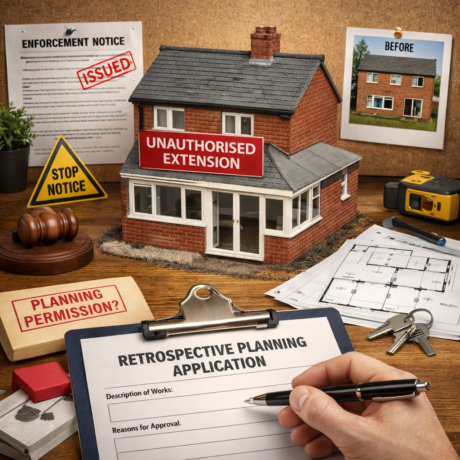
Retrospective planning permission is a way of seeking planning approval after development has already been carried out without the required permission, or where works have not been completed in accordance with an existing planning approval. A retrospective planning application is assessed by the local planning authority on its planning merits, in much the same way as an application submitted before the works were undertaken.
Submitting an application does not guarantee approval and, where a planning breach has occurred, the circumstances should be assessed carefully before proceeding—particularly if the council has already begun enforcement action. Planning World can review the planning position, advise on the appropriate strategy and prepare and manage the retrospective planning application on your behalf.
When Is a Retrospective Planning Application Required?
A retrospective planning application may be required where building works, a material change of use or other development has taken place without the necessary planning permission, or where completed works differ materially from the plans or conditions previously approved. Common examples include unauthorised extensions, conversions, changes of use, alterations and development identified during a property sale or following a planning enforcement investigation.
Not every apparent planning breach requires a retrospective application. Depending on the circumstances, the development may already be lawful, benefit from permitted development rights, or require a different planning or enforcement strategy. It is therefore important to establish the planning position before submitting an application.
Speak to a Retrospective Planning Consultant
Our retrospective planning consultants assess unauthorised development, establish the most appropriate route to regularise the works and prepare the drawings, planning application and supporting documents required. We can submit the application and deal with the council on your behalf.
Whether you’ve completed an extension without permission, departed from approved plans or been contacted by the council about a planning breach, we provide clear advice on the options available and the strategy for moving forward.
Full Retrospective Planning Application Service
Planning World provides a complete retrospective planning application service, from initial assessment through to the council’s decision.
Before an application is submitted, we review the planning history, assess the as-built development against relevant local planning policies and consider any design, amenity or other planning issues that could affect the prospects of approval. This allows us to identify potential problems and determine how the development should be presented to the council.
Where the council has already raised concerns about the unauthorised works, we also consider any planning enforcement implications before recommending the appropriate route forward. During the application, we respond to planning officer queries and advise on any issues that arise through to determination. For further information on retrospective applications and enforcement, see the Government’s planning enforcement and retrospective application guidance.
Not Sure What You Need?
Send us your property details, drawings or council correspondence. We’ll review the situation and advise whether retrospective planning permission is the appropriate route.
Get a Retrospective Planning Assessment
Get a Free Retrospective Planning Case Review
What Happens If You Build Without Planning Permission
Carrying out development without planning permission does not automatically constitute a criminal offence, but it can expose you to planning enforcement action. Different rules and consequences can apply to listed buildings and where formal enforcement action has already been taken.
Councils typically discover unauthorised works through:
- Neighbour complaints
- Site inspections
- Aerial imagery
- Council tax triggers
- HMO licensing checks
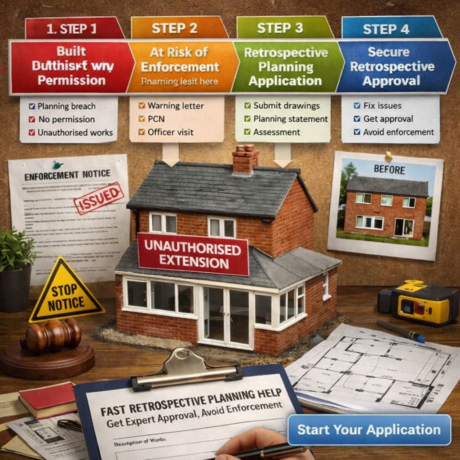
If they’ve contacted you already, you may have received:
- A Planning Contravention Notice (PCN)
- A warning letter
- A request for information
- A site visit appointment
These may form part of the council’s investigation before it decides whether formal enforcement action is appropriate
Can You Get Retrospective Planning Permission?
Yes. Retrospective planning permission can be granted where the development is considered acceptable in planning terms. The council assesses the development on its planning merits, taking account of relevant local and national planning policies and other material considerations
Factors that can support an application include:
- Appropriate design and appearance
- Acceptable scale and massing
- No unacceptable loss of daylight, sunlight or privacy
- Acceptable impact on neighbouring amenity
- Compliance with relevant local and national planning policies
When Retrospective Permission Is Usually Refused
Refusal is more likely when:
- The extension is overbearing
- There is overshadowing
- There is loss of privacy
- The design harms the street scene
- The use creates noise or parking issues
If your case fits any of these, you need a strong mitigation strategy.
How Planning Officers Assess Retrospective Applications
Officers look at:
- Design quality
- Scale and massing
- Impact on neighbours
- Highways and parking
- Local character
- Policy compliance
- Conservation area rules
- Amenity impacts
This is exactly what we prepare your application around.
How to Apply for Retrospective Planning Permission
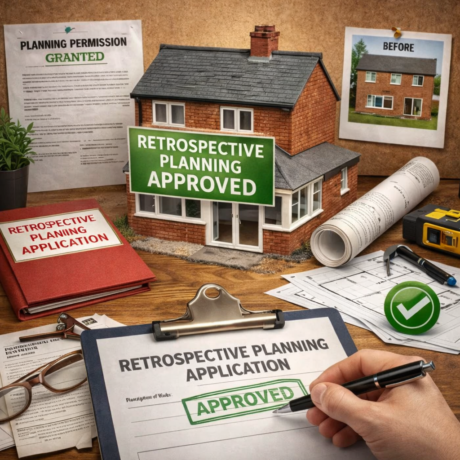
A retrospective planning application is submitted to the local planning authority in much the same way as a standard planning application, but the drawings and supporting information must accurately show the development as it has been built or the use that has already commenced.
The application will normally require the appropriate planning drawings, site and location plans, application forms and supporting planning justification. Depending on the development and location, additional information such as a heritage statement, daylight and sunlight assessment or other technical reports may also be required.
Planning World can assess the development, prepare the required drawings and supporting documents, submit the retrospective planning application and act as your planning agent throughout the council’s determination of the application.
Get a Free Retrospective Planning Case Review
How We Strengthen Your Retrospective Application
We prepare:
- High‑quality drawings
- A strong planning statement
- Mitigation measures
- Neighbour impact analysis
- Policy compliance evidence
This helps ensure the council has the drawings, planning justification and supporting evidence needed to assess the application properly.
What You’ll Need for a Retrospective Application
Typical documents include:
- Existing drawings/as-built drawings
- Proposed drawings/remedial drawings where required
- Elevations
- Site and block plans
- Planning statement / Design & Access Statement
- Sunlight/Daylight Report*
- Heritage Statement* (*If applicable)
Get Help With Retrospective Planning
Send us your property details, drawings or council correspondence. We’ll review the development, planning history and any enforcement issues and advise on the most appropriate route to regularise the works.
Positive Feedback
7-day Turnaround
Fixed Pricing From
Why Choose Planning World
- Specialists in enforcement, appeals, and unauthorised works
- Fast turnaround on drawings and statements
- Experience with complex and difficult cases
- Clear, fixed‑fee pricing
- Full handling of the entire process
Ready to Regularise Your Development?
Upload your documents or council correspondence and get a same-day retrospective planning assessment.
Retrospective Planning Across London
Retrospective Planning in RBKC
We handle retrospective planning applications across the Royal Borough of Kensington & Chelsea, including cases involving unauthorised extensions, alterations and development within conservation areas. Applications are prepared with reference to the relevant local planning, design, heritage and amenity policies.
Retrospective Planning in Camden
We handle retrospective planning applications across the London Borough of Camden, including unauthorised extensions, loft conversions, alterations and changes of use. Applications are prepared with reference to the relevant local planning policies, including design, heritage, residential amenity and the impact on neighbouring properties.
Where development has already been completed, our retrospective planning consultants assess the planning issues, prepare the necessary drawings and supporting justification, and deal with Camden Council throughout the application process.
Retrospective Planning in Westminster
We handle retrospective planning applications across Westminster, including unauthorised extensions, alterations and basement works. Applications are prepared with reference to Westminster’s relevant design, heritage, amenity and development policies.
Retrospective Planning in Islington
We handle retrospective planning applications across the London Borough of Islington, including unauthorised extensions, loft conversions, alterations and changes of use. Applications are prepared with reference to the relevant local planning policies, including design, heritage, residential amenity and the impact on neighbouring properties.
Where works have already been carried out without the necessary planning permission, our retrospective planning consultants assess the development, prepare the required drawings and supporting planning justification, and deal with Islington Council throughout the application process.
Retrospective Planning in Richmond
We handle retrospective planning applications across Richmond upon Thames, including unauthorised extensions, alterations and development affecting conservation areas and other areas subject to specific planning constraints. Applications are prepared with reference to relevant local planning, design, heritage and amenity policies.
FAQs — Retrospective Planning
Yes. If development has already been carried out without the required planning permission, you can apply for retrospective planning permission. The council will assess the development on its planning merits in much the same way as if permission had been sought before the work was carried out. Retrospective permission is not guaranteed, so it is important that the application properly addresses relevant planning policies, design, neighbour impacts and any other material considerations.
First establish whether planning permission was actually required and whether the development may already be lawful. If permission is required, a retrospective planning application may be the appropriate way to regularise the work. If the council has already contacted you or enforcement action has begun, seek advice before submitting anything, as this can affect the options available to you.
A retrospective application is made to the local planning authority for development that has already been carried out. The application will normally need the appropriate plans, forms and supporting information required for that type of development, together with the applicable planning fee. Planning World can assess the development, prepare the necessary drawings and supporting planning case, submit the application and deal with the council on your behalf.
If retrospective planning permission is refused, the unauthorised development does not become lawful simply because an application was made. Depending on the circumstances, you may be able to appeal the refusal, revise the proposal or take steps to remedy the planning breach. The council may also consider enforcement action, which could ultimately require alteration or removal of the unauthorised development.
Yes. Submitting a retrospective planning application does not automatically stop enforcement action. The council may pause enforcement while the application is considered, but it can continue or take formal action where it considers this necessary. If an Enforcement Notice has already been served, additional restrictions may also apply.
Yes. Planning World can review the unauthorised development, assess the planning issues, prepare the necessary drawings and supporting documentation, submit the retrospective planning application and act as your planning agent when dealing with the council. Where enforcement action has already begun, we can also assess how the retrospective application fits within the wider enforcement strategy.
Get Help With Retrospective Planning
Send us your property details, drawings or council correspondence and we’ll review the development and advise on the most appropriate route forward.