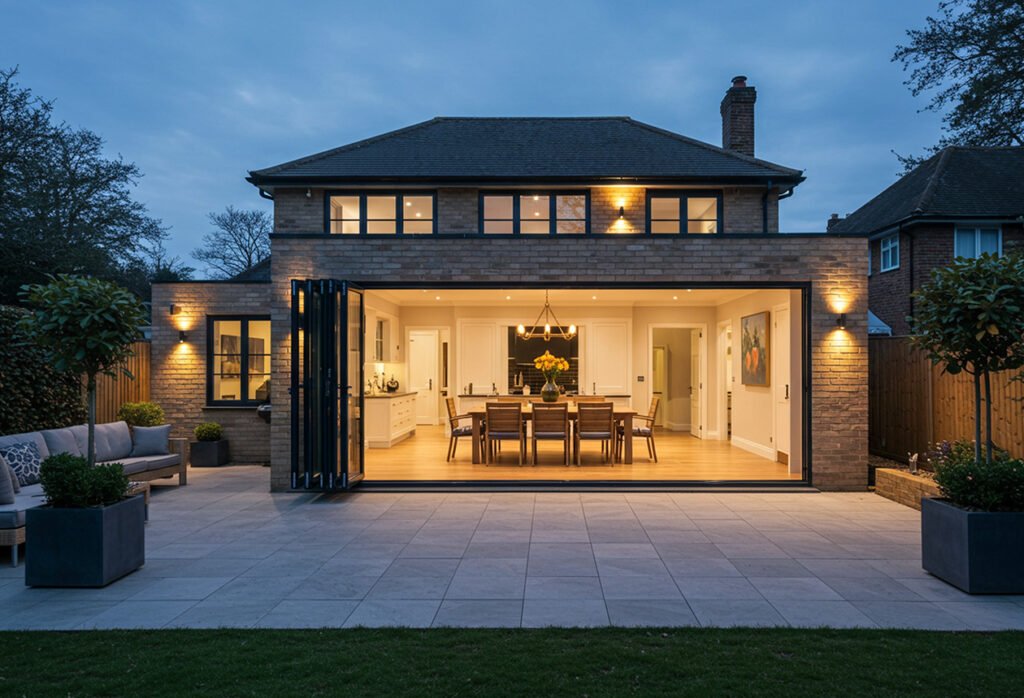
How to Add Space, Value & Style to Your Home — With Zero Stress
🏡 Why London Homeowners Are Choosing Extensions Over Moving
London property prices continue to rise, and moving costs (stamp duty, legal fees, removals) now average £25,000–£60,000. No surprise that homeowners are choosing to extend instead of relocate.
A well‑designed extension delivers:
- More living space without sacrificing garden or natural light
- Up to 20–30% added property value
- Better layout flow for modern family life
- A tailored home that fits your lifestyle
- A future‑proof investment in a competitive market
Unlike the competitor page, this guide gives you real numbers, real rules, and real design pathways — not generic statements.
🧭 What Type of House Extension Is Right for You?
Every property type has different opportunities. Here’s a clear, homeowner‑friendly breakdown.
🔹 Rear Extensions
Ideal for: Kitchen/dining expansions, open‑plan living, garden‑facing rooms. Benefits:
- Seamless indoor–outdoor flow
- Perfect for bi‑folds or sliding doors
- Works for terraced, semi‑detached, and detached homes
🔹 Side Return Extensions
Ideal for: Victorian/Edwardian terraces with wasted alley space. Benefits:
- Transforms narrow kitchens
- Adds width without losing garden
- Excellent for skylights and vaulted ceilings
🔹 Wraparound Extensions
Ideal for: Maximum ground‑floor expansion. Benefits:
- Creates large, multifunctional spaces
- Best for open‑plan living + utility rooms
- High ROI due to increased footprint
🔹 Double‑Storey Extensions
Ideal for: Families needing bedrooms, bathrooms, or office space. Benefits:
- Most cost‑effective way to double usable space
- Adds significant value
- Works well with modern or traditional designs
🔹 Loft Conversions
Ideal for: Extra bedrooms, offices, or studios. Benefits:
- Cheapest way to add a new floor
- Minimal disruption
- Dormer, hip‑to‑gable, and mansard options
🔹 Basement Conversions
Ideal for: Prime London zones with limited extension space. Benefits:
- Adds premium square footage
- Perfect for gyms, cinemas, wine rooms
- High-end resale appeal
📏 How Far Can You Extend Without Planning Permission? (2025 Rules)
This is where most competitor pages fall short — so here’s the clear, accurate, homeowner‑friendly version.
Under Permitted Development (PD):
- Terraced & Semi‑Detached: Extend up to 6m to the rear
- Detached: Extend up to 8m to the rear
- Side Extensions: Up to half the width of the original house
- Loft Conversions:
- Terraced: 40m²
- Semi/Detached: 50m²
- Height Rules:
- Max eaves: 3m
- Max ridge: no higher than existing roof
PD Restrictions Apply If:
- You live in a Conservation Area
- Your home is Listed
- You live in a flat or maisonette
- You want a double‑storey extension
- You exceed PD volume/height limits
If any of these apply, you’ll need Full Planning Permission — and that’s where expert guidance becomes essential.
📝 Planning Permission for House Extensions: What You Need to Know
A strong planning application includes:
- Accurate architectural drawings
- A compliant design aligned with local policies
- Daylight/sunlight assessments
- Heritage or conservation statements (if required)
- Structural considerations
- Neighbour consultation strategy
Most London LPAs take 6–8 weeks to decide. SMARTePLANS® typically secures approvals faster due to policy‑aligned design and borough‑specific expertise.
💷 How Much Does a House Extension Cost in London? (2025 Guide)
| Extension Type | Typical Cost Range | Notes |
| Rear Extension | £45,000–£120,000 | Depends on size & glazing |
| Side Return | £35,000–£85,000 | Popular for terraces |
| Wraparound | £80,000–£200,000 | Highest ROI |
| Double‑Storey | £90,000–£250,000 | Best cost per m² |
| Loft Conversion | £35,000–£75,000 | Dormers cost more |
| Basement | £150,000–£500,000 | Premium zones only |
Costs vary by borough, materials, structural complexity, and contractor quality.
🎨 Design Trends for 2025 Extensions
To outrank competitors, we include design intent, not just planning info.
Current trends include:
- Slim‑frame aluminium glazing
- Broken‑plan layouts
- Roof lanterns & large skylights
- Natural materials (microcement, timber, stone)
- Energy‑efficient insulation & glazing
- Seamless garden integration
- Hidden utility rooms
- Statement kitchen islands
🧠 Why a Professional Architectural Designer Matters
A premium extension isn’t just about adding space — it’s about adding value, light, flow, and long‑term usability.
A professional architect ensures:
- Compliance with PD & planning rules
- Maximum natural light
- Structural safety
- Cost‑efficient design
- Smooth planning approval
- Contractor‑ready drawings
- A design that enhances resale value
Competitor pages claim “personalised service” — but homeowners want clarity, certainty, and expertise, which this page delivers.
🏆 Why Homeowners Choose Planning World
- Borough‑specific planning expertise
- Fast, accurate drawings
- Premium architectural visuals
- Planning success across all London boroughs
- Fixed‑fee packages
- End‑to‑end support
- Instant online quotes
- Trusted by homeowners, developers & investors
❓ House Extension FAQs
Do I need planning permission for a house extension?
Not always. Many single‑storey extensions fall under Permitted Development, but double‑storey, flats, and conservation areas require full permission.
How long does a house extension take?
- Design: 1–3 weeks
- Planning: 6–8 weeks
- Building regs: 1–2 weeks
- Construction: 8–20+ weeks
Will an extension add value to my home?
Yes — typically 10–30%, depending on size, location, and design quality.
Can I live at home during the build?
Most single‑storey extensions allow you to stay, but lofts and basements may require temporary relocation.
🚀 Ready to Transform Your Home?
Get a free, instant quote and see how much space and value you can add — without the stress.